


How Catholic Schools Can Support Elite Student-Athletes Without Sacrificing Academic Excellence
When Catholic school leaders think about student retention, elite student-athletes may not be the first group that comes to mind. Yet for many...
3 min read
Advent is a sacred season of waiting and wonder. In these four weeks, the Church invites us to prepare our hearts for Christ’s coming. In Catholic schools, the Advent season offers more than decorations or countdowns.
It is a time to engage students in prayerful anticipation, connect Scripture to our lived faith, and strengthen the community through shared rituals, like the Advent wreath or Advent calendar. This article offers another way to do this: the Jesse Tree Activity Kit. This creative and deeply biblical tradition helps students, teachers, and the entire school community trace the story of salvation, one branch at a time.
The Jesse Tree takes its name from the prophecy in the Book of Isaiah: “A shoot shall sprout from the stump of Jesse, and from his roots a bud shall blossom.” (Isaiah 11:1)
Jesse was the father of King David, and from his family line would come the Messiah. The Jesse Tree visually represents the lineage from Adam and Eve through the prophets, all leading to the birth of Christ.
In practice, the Jesse Tree becomes, in a way, a “family tree of faith.” Each day of Advent, a new ornament or symbol is added to the tree. Each one represents a key person, covenant, or event in salvation history. When combined with short Scripture readings or reflections, the Jesse Tree becomes a storytelling tool that allows students to see how God’s promises unfold across generations.
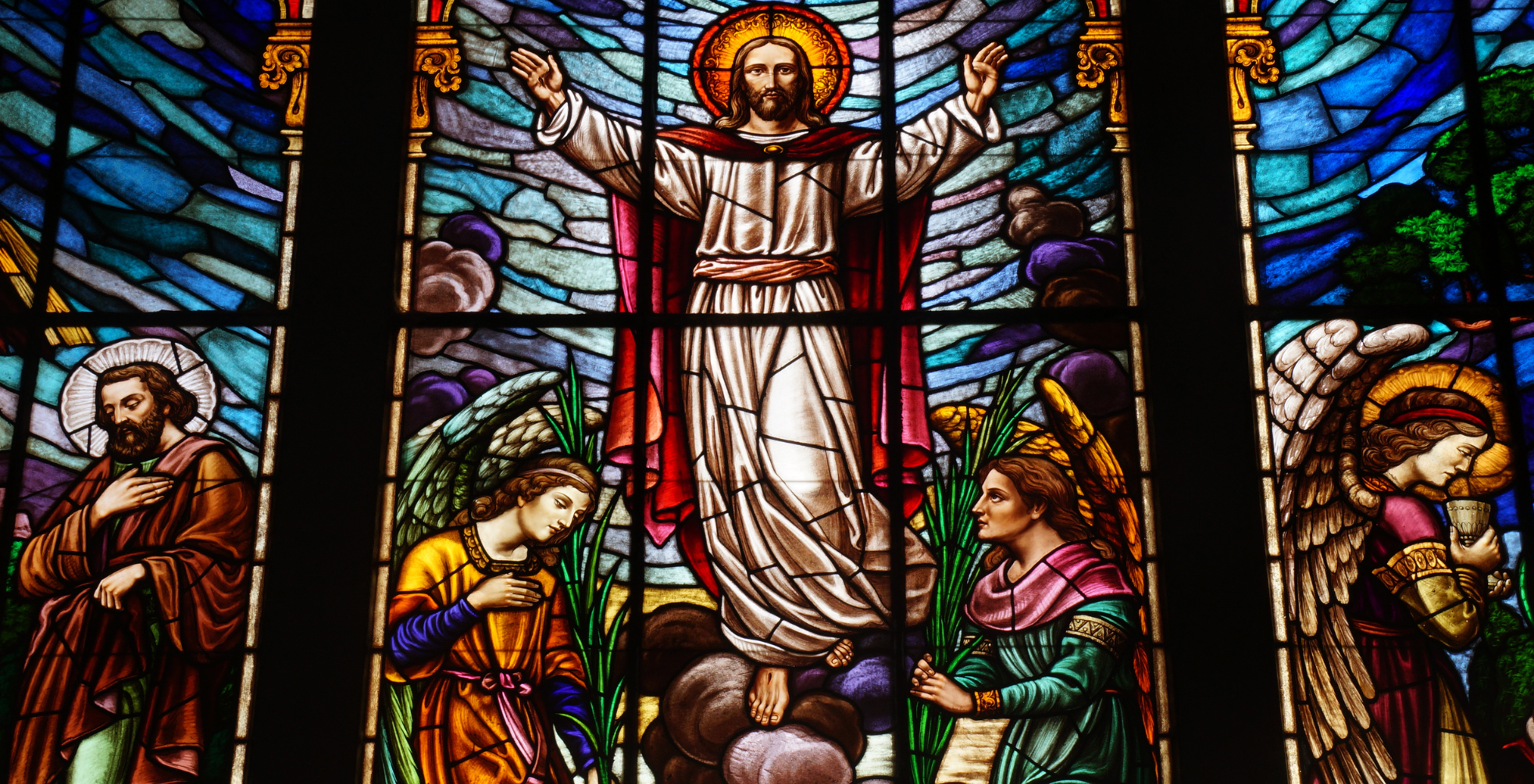
The Jesse Tree tradition has deep Christian roots. Medieval artists often depicted the “Tree of Jesse” in stained glass windows or illuminated manuscripts, showing Christ’s ancestors growing from Jesse’s line like branches on a living tree. These early works were meant to teach biblical history to a largely illiterate population, long before textbooks existed.
Centuries later, families and parishes began adapting this beautiful catechetical imagery into a devotional practice. What once appeared on cathedral walls now lives in classrooms, homes, and parish halls as a simple but meaningful way to journey through Advent.
For Catholic educators, the Jesse Tree can be an ideal teaching tool that blends Scripture, art, and reflection, anchored in tradition yet adaptable for modern faith formation.
Each ornament on the Jesse Tree tells a part of the story of salvation history. Together, they weave a continuous thread from creation to Christ’s birth. Each Jesse Tree is unique, but the symbols hanging from its boughs may follow familiar themes:
| Story or Person | Common Symbol | Lesson or Theme |
|---|---|---|
| Creation | Sun, stars, or globe | God as Creator of all life |
| Noah | Ark or rainbow | God’s promise never to abandon His people |
| Abraham | Stars or tent | God’s covenant with His chosen people |
| Moses | Tablets or burning bush | God’s law and guidance |
| David | Crown or harp | God’s promise of an everlasting kingdom |
| Isaiah | Scroll | The prophets’ call to hope |
| Mary | Lily or heart | Mary’s “yes” to God’s plan |
| Jesus | Manger or cross | The fulfillment of every promise |
Each symbol helps students connect Old Testament moments to their fulfillment in Christ. Over time, this visual storytelling nurtures a deep understanding of humanity's ongoing relationship with a faithful God.
The Jesse Tree offers Catholic educators an opportunity to weave Scripture, tradition, and creativity into the rhythm of Advent. Rooted in salvation history, this practice helps students trace God’s promises, from Creation to the coming of Christ, through daily reflection and simple, symbolic ornaments. By introducing a Jesse Tree, schools can help students not only learn about biblical figures but also see themselves and their Catholic education as part of God’s ongoing story of faith.
The Jesse Tree transforms abstract theology into something tangible. Students handle symbols, read stories, and participate in a living narrative. It’s faith formation through discovery.
Advent can be busy for schools, but the Jesse Tree provides a unifying rhythm. A daily ritual—five minutes of prayer, reflection, and ornament hanging—can center the community and keep the focus on Christ amidst the bustle of November and December.
When every grade or classroom contributes an ornament or reflection, the Jesse Tree becomes a school-wide expression of unity. Each student’s participation connects them to something larger and becomes a visible reminder that we are all branches on God’s family tree.
Your school’s “tree” could take many forms:
What matters is that it’s visible, accessible, and treated with reverence.
Each class or grade can design ornaments that reflect a part of the story. Encourage creativity! Paper cutouts, clay shapes, or student drawings work beautifully. Include the story’s title and Scripture reference on the back so others can reflect on it.
Consider laminating or preserving ornaments for future Advents; over the years, they become cherished artifacts of your school’s spiritual life.
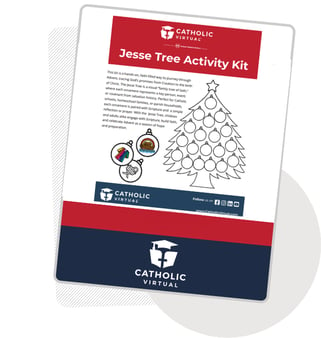
Print and use the Jesse Tree Activity Kit as one possible 24-day sequence to follow through Advent. With 24 ornaments tied to themes, Scripture references, and prayer, Catholic schools can use or adjust based on their schedule or liturgical calendar.
This activity need not take a large commitment of time and energy to be impactful. A few minutes each day can make the whole season meaningful.
By weaving the Jesse Tree across disciplines, students experience faith as something that shapes every part of school life.
When Catholic schools embrace the Jesse Tree, they do more than decorate a space. They cultivate an atmosphere of reflection, community, and joy rooted in Scripture. Students see that every story points to Christ and that their own lives are part of the same unfolding story of grace. As Advent unfolds, the Jesse Tree becomes a daily reminder that we wait in hope and prepare our hearts for the coming of Christ.
%20takes%20the%20puck%20out%20of%20the%20zone%20against%20Delbarton%20during%20the%20first%20round%20of%20the%20Gordon%20Cup%20at%20the%20Ice%20Vault%20on%202_25_21_-1.png)
When Catholic school leaders think about student retention, elite student-athletes may not be the first group that comes to mind. Yet for many...

A Letter from Catholic Virtual President, Rob Birdsell

How Notre Dame High School in Sherman Oaks, California, is Strengthening Academics, Enrollment, and Student Success Through Strategic Summer and...