

Celebrating Catholic Saints: Honoring All Saints’ Day and Their Legacy Throughout the Year
In Catholic schools, faith guides the rhythm of learning, prayer, and community life. Reflecting on the saints—holy men and women who faithfully...
4 min read
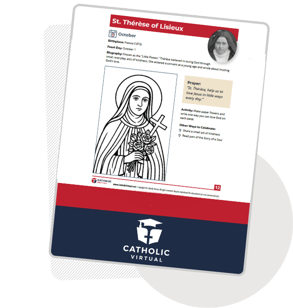
Keep the witness of the saints present in your classroom beyond a single celebration. Start a “Saint of the Month” tradition with your Catholic school students using this free printable kit featuring biographies, prayers, and hands-on activities.

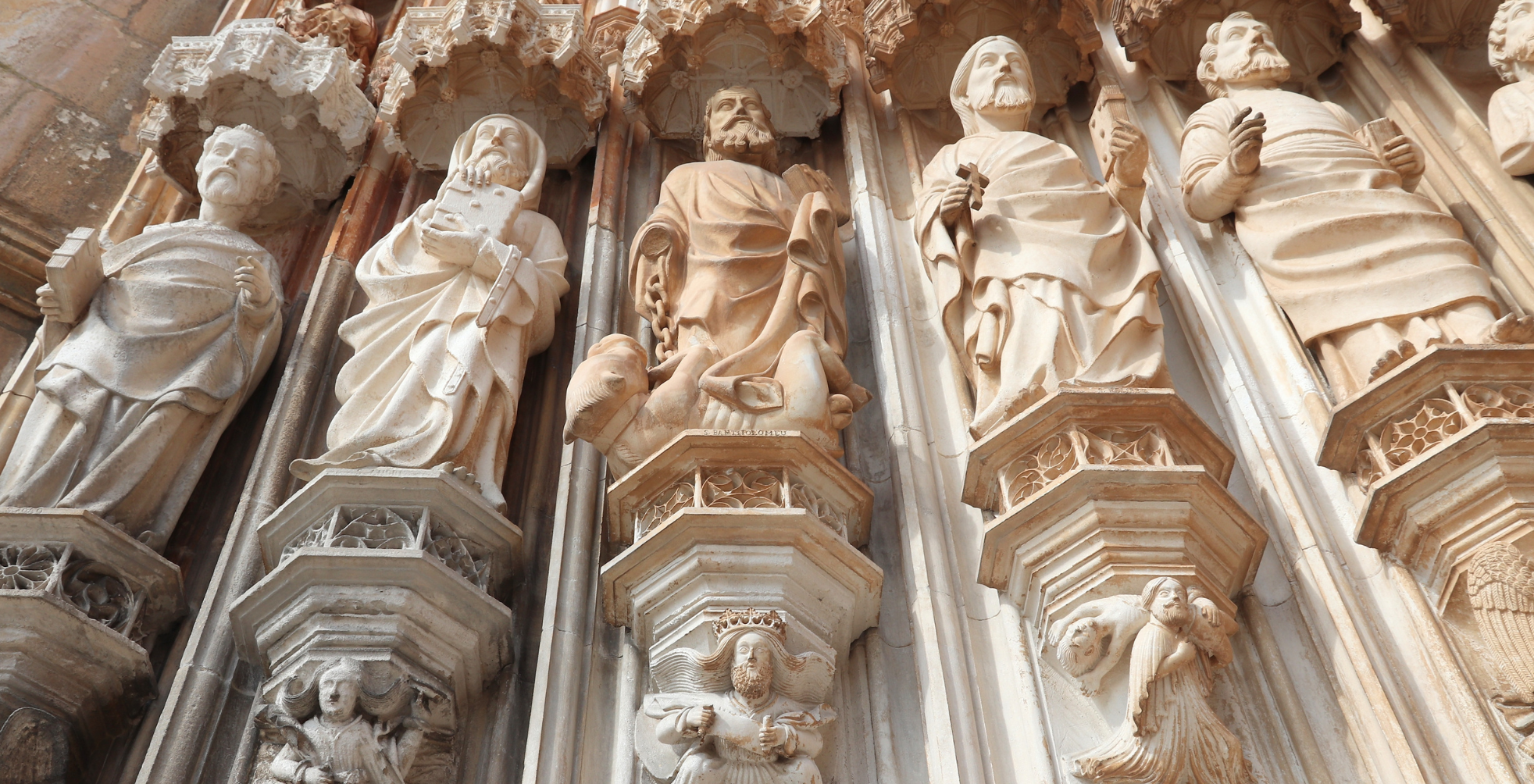
In Catholic teaching, a saint is a person who lived a holy life on earth and now shares eternal life with God in heaven. The Church teaches that every Christian is called to holiness. Those in heaven—whether officially canonized or not—are saints because they lived lives of heroic virtue, gave themselves in love for others, or remained faithful even to the point of martyrdom. Their lives offer a model of what it means to follow Christ wholeheartedly.
The saints remind us that holiness is possible in every time, place, and circumstance. Through their example, we see how ordinary people—students, parents, priests, religious, and laypeople—can live with extraordinary faith.
The Catholic Church has a careful process for officially declaring someone a saint for the entire Church to venerate. This process includes in three main steps:
Venerable: A deceased person is formally recognized by the pope as having lived a life of heroic virtue or offered their life in sacrifice.
Blessed: Beatification requires proof of one miracle through the candidate’s intercession (martyrs are exempt from this first miracle requirement). At this stage, the person may be honored locally or regionally.
Saint: Canonization follows after a second confirmed miracle (except in certain cases when the pope may waive requirements). The person is then recognized as a saint for the universal Church.
This process ensures that the lives of canonized saints are held up as trustworthy examples of holiness for Catholics everywhere.
Catholics honor the saints for two main reasons:
Saints offer us a witness of holiness. As role models. Their lives inspire us to follow Jesus more closely, whether through acts of charity, perseverance in suffering, or deep love of prayer.
Catholics believe the saints, already united with God in heaven, continue to care for us on earth. Therefore, we ask for their intercession. As we ask friends to pray for us, we ask the saints to intercede before God on our behalf.
Honoring saints is never worship; we worship God alone. Instead, celebrating saints reminds us that we are part of a larger family of faith, the Communion of Saints, united across time and eternity.
All Saints’ Day is officially known in the Church as the Solemnity of All Saints. It is a Holy Day of Obligation, celebrated on November 1, meaning Catholics are called to attend Mass. The day recognizes all saints who share eternal life with God. It is a celebration of the countless faithful who have reached heaven, reminding us of the hope of eternal life and the call to holiness for every believer.
For Catholic schools, All Saints’ Day is not only a Holy Day of Obligation but also a valuable educational and spiritual opportunity. Celebrating all Saints’ Day helps students understand that sainthood is a universal calling, meant for each of them and every Christian, not just a few individuals in history. The celebration can strengthen your school community and highlight how every aspect of learning, across subjects, can be approached with faith.
Begin the day by attending Mass as a school community. Consider adding a prayer service where students learn about the Communion of Saints and pray for one another’s intentions.
Many schools invite students to dress as their favorite saints. This engaging activity helps children learn about saintly lives in a hands-on, memorable way. Students can share a brief fact about “their” saint during the parade.
Encourage older students to research a saint whose life connects to their own interests—scientists can learn about St. Albert the Great, artists about St. Catherine of Bologna, and athletes about St. Sebastian. Display posters or presentations in a hallway called, for the day, “Hall of Saints.”
Art: Younger students can make saint holy cards or decorate “stained-glass” windows with images of saints.
Music: Sing hymns like “For All the Saints” during a school assembly.
Storytelling: Read aloud saint stories, emphasizing courage, kindness, and love of God.
Tie your All Saints’ Day celebration to action. Students can collect food, clothing, or other donations in honor of saints known for service, like St. Vincent de Paul or St. Teresa of Calcutta.
Celebrating saints is not just about learning Church history—it’s about helping students recognize their own call to holiness. By learning about holy men and women, students see that faith is lived out in countless ways: in classrooms, hospitals, families, mission fields, and beyond.
For administrators and teachers, weaving saints into the school year strengthens Catholic identity, enriches the curriculum, and inspires students to live their faith joyfully.
Celebrating All Saints’ Day is a powerful start, but the witness of the saints can and should inspire Catholic schools throughout the year.
Religion Classes: Highlight a “Saint of the Month” connected to liturgical feasts or school virtues.
History and Social Studies: Study saints who shaped culture, such as St. Thomas More or St. Joan of Arc.
Science: Introduce patron saints of science and medicine, like St. Albert the Great or St. Gianna Beretta Molla.
Language Arts: Read saint biographies and encourage students to write reflective essays on what they learned.
Beyond lessons, schools can create a culture that reflects saintly virtues. Some ideas include:
Virtue Recognition Programs: Celebrate students who demonstrate qualities like humility, kindness, and courage.
Prayer Corner or Shrine: Dedicate a space in each classroom to the “Saint of the Month,” including a short biography and prayer.
Patron Saint Connections: Invite students to research and adopt saints as personal patrons, learning to ask for their intercession regularly.
Each canonized saint has a feast day—a day the Church sets aside to remember and celebrate that saint’s life, witness, and entrance into eternal life with God. Teachers can observe the feast days of well-known saints through a brief prayer, classroom activity, or reflection that helps keep the saints present in the everyday life of the school.
The saints show us that holiness is possible for everyone, especially the students in our classrooms today. All Saints’ Day gives Catholic schools a meaningful opportunity to celebrate the Communion of Saints, honor faithful role models, and encourage children to live with faith, hope, and love. By celebrating the feast through prayer, learning, and joy, and by keeping the stories of the saints alive throughout the school year, Catholic schools can help students not only admire the saints but also seek to follow Jesus in their own unique and holy ways, strengthening both their learning communities and the wider Church.
In Catholic schools, faith guides the rhythm of learning, prayer, and community life. Reflecting on the saints—holy men and women who faithfully...
%20takes%20the%20puck%20out%20of%20the%20zone%20against%20Delbarton%20during%20the%20first%20round%20of%20the%20Gordon%20Cup%20at%20the%20Ice%20Vault%20on%202_25_21_-1.png)
When Catholic school leaders think about student retention, elite student-athletes may not be the first group that comes to mind. Yet for many...

A Letter from Catholic Virtual President, Rob Birdsell